Hin raunverulega spurning: Útvista eða eiga?
Útvistun CNC-vinnsluþjónustu til Kína kostar venjulega 15 til 55 Bandaríkjadali á hlut fyrir álfestingar samanborið við 60 til 150 Bandaríkjadali í Bandaríkjunum. Að eiga þína eigin lóðréttu CNC-vinnslumiðstöð frá kínverskum framleiðanda kostar 25,000 til 40,000 Bandaríkjadali, þar sem jafnvægishlutfall miðað við útvistun er um það bil 1,500 til 2,500 hlutir á ári, allt eftir flækjustigi hluta og núverandi þjónustuverði.
Samanburðurinn hljómar einfaldur en hann felur í sér þrjár mikilvægar breytur sem breyta svarinu: framleiðslumagn, breytileiki íhluta og hversu mikils þú metur stjórn. Mikil framleiðslumagn, endurtakanlegir hlutar eru hagstæðari en eignarhald. Lítil framleiðslumagn, frumgerð eða mjög breytileg vinna eru hagstæðari en þjónusta. Gráa svæðið í miðjunni er þar sem flestir kaupendur starfa í raun.
Algengur misskilningur er að kínversk CNC þjónusta sé ódýr vegna þess að vélarnar eru ódýrar. Það er ekki raunin. Vélar sem notaðar eru í kínverskum verksmiðjum eru yfirleitt sömu vörumerki og notaðar eru í bandarískum og evrópskum verksmiðjum, þar á meðal Fanuc, Mazak, Haas og sambærilegar iðnaðarvélar framleiddar í Kína. Kostnaðarmunurinn stafar af launakostnaði, verksmiðjukostnaði og efnisframboðskeðjum, sem allt er byggingarlega lægra í Kína. Að kaupa vélina sjálfa veitir þér aðgang að búnaðarhlið þessa kostnaðarforskots.
Hvað er CNC vinnsluþjónusta í Kína?
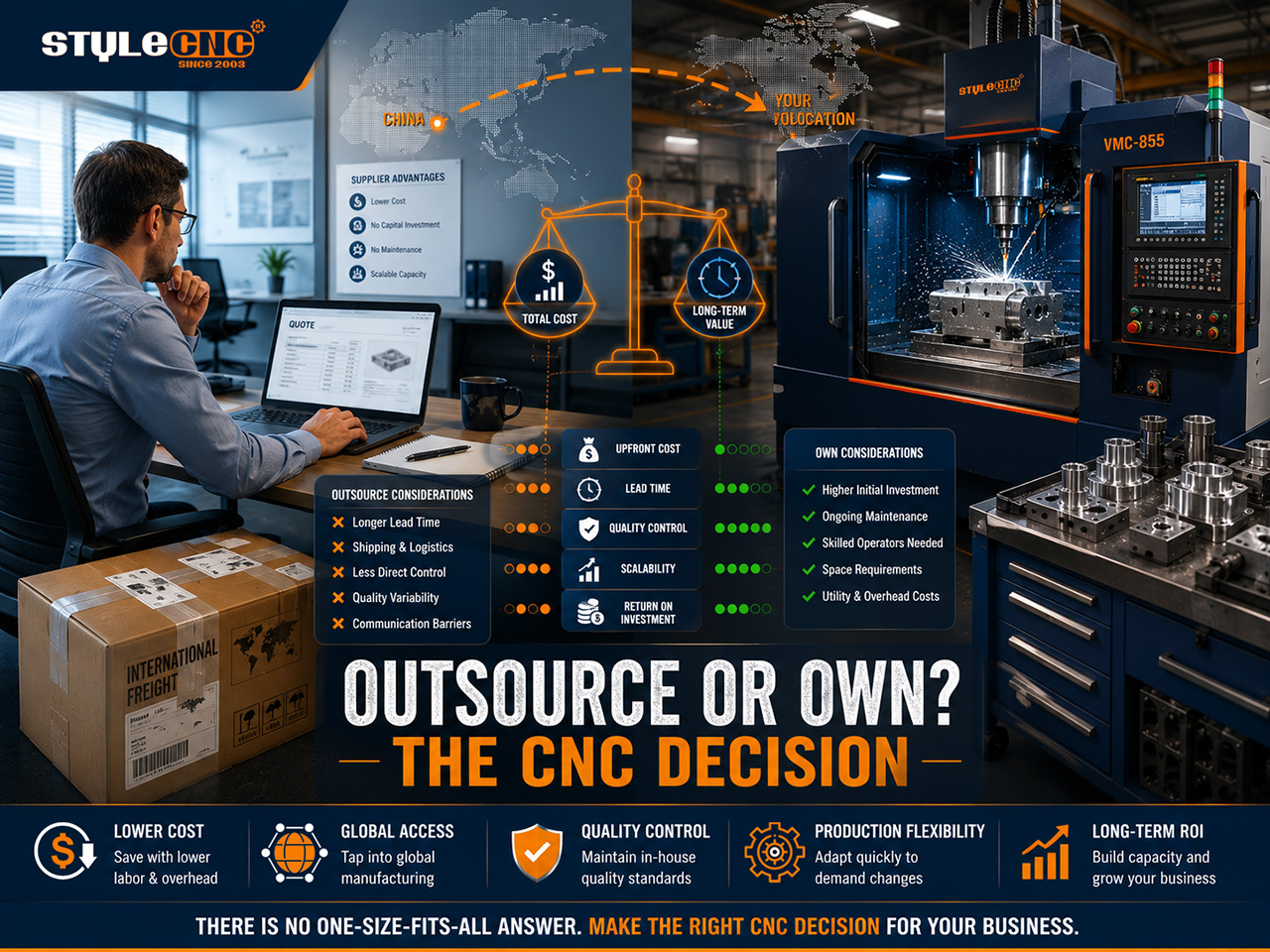
Kínversk CNC-vélaþjónusta þýðir að hlaða upp CAD-skrá (STEP, IGES eða Parasolid) í kínverska verksmiðju, fá tilboð innan sólarhrings og fá fullunna hluti senda á alþjóðavettvangi innan 2 til 4 vikna, þar með talið flutningskostnað.
Þjónustukerfið hefur fagnað verulega. Nútíma kínverskir CNC-framleiðendur bjóða upp á gervigreindarknúnar tilboðsgjafir, endurgjöf samkvæmt hönnun fyrir framleiðsluhæfni (DFM), ISO 9001 vottun og gæðaeftirlitsskýrslur. Samkvæmt gögnum frá greininni koma 63.3 prósent af eftirspurn kínverskrar CNC-vinnslu frá pöntunum upp á 50 einingar eða færri og 43.3 prósent af tilboðsbeiðnum eru fyrir frumgerðir með 1 til 5 einingum. Kínverskar verksmiðjur þjóna smærri framleiðslulotum og frumgerðavinnu jafn vel og þær þjóna fjöldaframleiðslu.
Dæmigerðar CNC-vinnsluaðferðir sem í boði eru eru meðal annars 3-ása fræsun, 4-ása og 5-ása fræsun, CNC-beygja, EDM, vírsniðun, svissnesk vinnsluaðferð, plötusmíði og eftirvinnsla (anodisering, duftlökkun, burstun, fæging, hitameðferð). Efniviðurinn er allt frá áli 6061 og 7075, ryðfríu stáli 304 og 316, messingi, kopar, verkfærastáli, títaníum og verkfræðiplasti.
CNC vinnsluþjónusta í Kína: Það sem þú borgar í raun
Tímaverðin hér að neðan endurspegla núverandi viðmið í greininni frá Haizol, Davantech, Lewei Precision, JXD Machining og öðrum rótgrónum kínverskum CNC þjónustuaðilum. Verðin ná yfir vinnutíma vélarinnar, vinnuafl rekstraraðila og verksmiðjukostnað en ekki efni, uppsetningu, verkfæragerð, frágang og flutningskostnað.
| aðferð | Kínaverð (USD/klst.) | Gengi Bandaríkjanna/ESB (USD/klst.) |
|---|---|---|
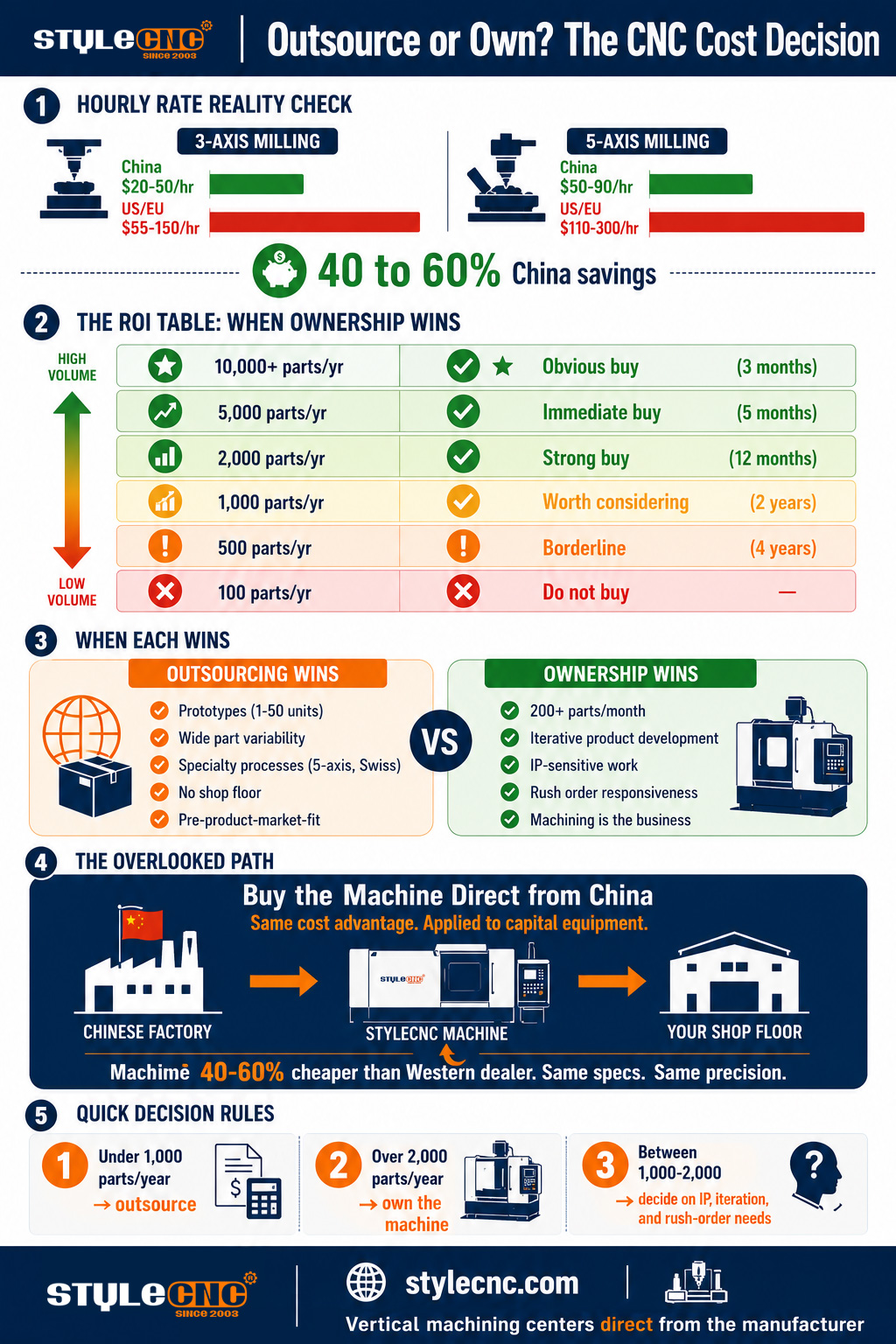
| 3 ása fræsing | $20 til 50 | $55 til 150 |
| 4-ása og 5-ása fræsun | $50 til 90 | $110 til 300 |
| CNC beygja | $20 til 40 | $50 til 130 |
| Svissnesk vinnsla | $50 til 90 | $120 til 250 |
| Vír EDM | $30 til 60 | $80 til 180 |
Verðlagning á hlut fylgir mynstri. Dæmigert fræst álfesting úr 6061 kostar á bilinu 20 til 55 Bandaríkjadali í Kína samanborið við 60 til 150 Bandaríkjadali í Bandaríkjunum, sem er 40 til 60 prósenta lækkun á kostnaði við vinnsluvörur. Magn skiptir miklu máli: 99.6 prósent kínverskra birgja bjóða upp á verðlagningu á mörgum stigum, með meðalafslætti upp á 37 prósent milli 1. og 2. þreps og 54 prósent milli 1. og 3. þreps. Aðeins 25 prósent kaupenda óska sérstaklega eftir verðlagningu á mismunandi stigum, sem þýðir að flestir skilja eftir peninga á borðinu.
Falinn kostnaður sem safnast upp: alþjóðlegur fr8 (50 til 300 Bandaríkjadalir fyrir litlar pantanir, meira fyrir magnpantanir), tollar og gjöld (mismunandi eftir löndum og efni), greiðslu- og gjaldmiðlaumreikningsgjöld, gæðaeftirlitsþjónusta þriðja aðila ef notuð er og samskiptakostnaður (tímabelti og þýðing).
Að eiga þína eigin CNC vél: Heildarkostnaðarmyndin
Eignarhald á vélum felur í sér fjárfestingarkostnað, uppsetningu, verkfæri, efni, vinnuafl rekstraraðila, rafmagn, rekstrarvörur, viðhald og hugsanlega afskriftir. Taflan hér að neðan sundurliðar raunhæfar tölur fyrir lítið til meðalstórt verkstæði sem rekur lóðrétta vinnslumiðstöð.
| Kostnaðarflokkur | Dæmigert svið (USD) | Skýringar |
|---|---|---|
| Vél (VMC frá Kína) | 25,000 60,000 til | Verðlagning beint frá framleiðanda |
| Vél (VMC frá bandarískum söluaðila) | 60,000 150,000 til | Sömu forskriftir, söluálagning + innflutningur |
| Uppsetningu og gangsetningu | 2,000 8,000 til | Rafmagnsbúnaður, uppsetning, upphafsstilling |
| Byrjunarverkfærapakki | 3,000 10,000 til | Verkfærahaldarar, skurðir, vinnuhlutahaldarar |
| Vinnuafl rekstraraðila (Bandaríkin) | 25 til 45 Bandaríkjadalir á klukkustund | Hlaðinn vextir með fríðindum og kostnaði |
| Rafmagn | 2 til 5 Bandaríkjadalir á klukkustund | 10 til 20 kW aflnotkun undir álagi |
| Rekstrarefni (innsetningar, kælivökvi) | 3 til 8 Bandaríkjadalir á klukkustund | Mismunandi eftir efni og hringrásarstyrk |
| Viðhald og varahlutir | 3 til 5 prósent af kostnaði við vélina árlega | Fyrirbyggjandi og viðbragðsaðgerðir |
| gengislækkun | 10 ára beinlínulíkur vöxtur, dæmigerður | Skattameðferð er mismunandi eftir lögsagnarumdæmum |
Stærsti kostnaðarhvetjandinn við eignarhald er hvar þú kaupir vélina. Lóðrétt vinnslumiðstöð keypt beint frá kínverskum framleiðanda kostar 40 til 60 prósent minna en vél með sömu forskrift keypt frá bandarískum eða evrópskum söluaðila. Kaupendur sem kaupa varahluti frá Kína en vélar á staðnum eru í raun að greiða álagningu söluaðila tvisvar, einu sinni fyrir hvern hlut og einu sinni fyrir sína eigin vél.
Arðsemi fjárfestingar (ROI) taflan: Hvenær borgar eignarhald sig til baka?
Samanburðurinn hér að neðan gerir ráð fyrir álhluta með þjónustuverði upp á 25 Bandaríkjadali á hlut í Kína, framleiðslukostnaði upp á 10 Bandaríkjadali á hlut (efni, tími notanda, rekstrarvörur, rafmagn) og vélakostnaði upp á 30,000 Bandaríkjadali fyrir lóðrétta vinnslumiðstöð keypta beint frá Kína. Leiðréttið fyrir hagkvæmni hlutarins.
| Árlegt bindi | Útvistunarkostnaður | Kostnaður innanhúss | Endurgreiðslutímabil |
|---|---|---|---|
| 100 hlutar/ár | $2,500 | 1,000 Bandaríkjadalir + vél | 20+ ár (ekki kaupa) |
| 500 hlutar/ár | $12,500 | 5,000 Bandaríkjadalir + vél | 4 ár (á mörkum) |
| 1,000 hlutar/ár | $25,000 | 10,000 Bandaríkjadalir + vél | 2 ár (til skoðunar) |
| 2,000 hlutar/ár | $50,000 | 20,000 Bandaríkjadalir + vél | 12 mánuðir (sterk kaup) |
| 5,000 hlutar/ár | $125,000 | 50,000 Bandaríkjadalir + vél | 5 mánuðir (kaup strax) |
| 10,000+ hlutar/ár | 250,000+ Bandaríkjadalir | 100,000+ Bandaríkjadalir + vél | 3 mánuðir (augljós kaup) |
Jafnvægispunkturinn þar sem eignarhald byrjar að skila árangri er um það bil 1,500 til 2,000 hlutar á ári fyrir dæmigerða álvinnslu. Þar fyrir ofan sparar eigin vélar raunverulegan pening á hverju ári. Þar fyrir neðan er útvistun enn skynsamlegri fjármagnsúthlutun.
Tvær breytingar skipta máli. Í fyrsta lagi hafa verðmætari hlutar (títan, lækningatæki, flug- og geimhlutir) meiri sparnað á hvern hluta og lægri jafnvægishlutfall. Í öðru lagi lækkar fjárfestingarkostnaðurinn um 40 til 60 prósent með því að kaupa vélina frá kínverskum framleiðanda í stað vestræns söluaðila, sem minnkar jafnvægishlutfallið um það bil helming.
Þegar útvistun til Kína er skynsamleg
Útvistun er sannarlega rétta ákvörðunin í mörgum tilfellum. Hunsaðu alla sem segja þér annað.
✓ Frumgerð og forframleiðslukeyrslur1 til 50 einingar þar sem kostnaður við uppsetningu, forritun og festingar myndi vega þyngra en hagkvæmni eigin vélarinnar. Kínverskir birgjar sjá um frumgerðavinnu á skilvirkan hátt á samkeppnishæfu verði.
✓ Mikill breytileiki í hlutumEf mánaðarleg framleiðsla þín spannar 20+ mismunandi hlutahönnun, hver í litlu magni, mun engin ein vél keyra þá á skilvirkan hátt. Þjónustuverksmiðjur með rekki af vélum og 24 tíma vaktir höndla blönduð vinnuálag betur en ein eining í eigu.
✓ Sérhæfð ferli sem ekki er hægt að réttlæta innanhúss5-ása, svissnesk beygja, vírsniðun og sérhæfð frágangur krefst fjármagns og sérþekkingar sem borgar sig aðeins til baka við mikla nýtingu.
✓ Engin verkstæðisgólf til að hýsa búnaðEigin CNC vélar þurfa 200+ fermetra pláss, þriggja fasa aflgjafa, loftþjöppun, kælivökvameðhöndlun og flísarstjórnun. Ekki allir hafa það pláss eða löngun til að smíða slíkt tæki.
✓ Viðskiptamódel enn í staðfestinguNýfyrirtæki og vörufyrirtæki sem eru að koma vörunni á markað fyrir áður en þau eru aðlagaðar að markaði njóta góðs af því að greiða aðeins fyrir varahluti þegar þau þurfa á þeim að halda. Fjármagn sem er bundið í vél er fjármagn sem ekki er tiltækt fyrir markaðssetningu eða verkfræði.
Þegar þú vinnur að kaupa þína eigin vél
Eignarhald er betra en útvistun í þessum aðstæðum og bilið eykst eftir því sem fyrirtækið starfar lengur.
✓ Stöðugt mánaðarlegt magn yfir 100 til 200 hlutaÚtreikningar á endurteknum hlutum eru alltaf í hag eignarhalds þegar magn er áreiðanlegt. Sérhver hlutur verður sparnaður miðað við útvistunargrunnlínu.
✓ Endurtekin vöruþróunAð breyta hönnun, endurklippa og prófa á eigin vél tekur klukkustundir. Sama ítrekun í gegnum kínverska þjónustu tekur að minnsta kosti daga. Hraðinn eykst yfir þróunarferlið.
✓ Næmi fyrir hugverkaréttindumAð senda CAD-skrár til utanaðkomandi birgja skapar hugverkaréttindi. Innri vinnsla útilokar allan þennan áhættuflokk, sem skiptir máli fyrir lækningatæki, varnartengdar vörur og sérhannaðan iðnaðarbúnað.
✓ Viðbrögð við hraðpöntunumVarahlutur sem þú þarft á morgun getur verið kominn í gang á þinni eigin vél á nokkrum klukkustundum. Frá kínverskri þjónustu, jafnvel með flugfrakt, tekur það 5 til 10 daga. Viðskiptavinir borga aukalega fyrir þá svörun.
✓ Að byggja upp vélræna vinnslufyrirtækið sjálftEf fyrirtækið þitt er vélræn verkstæði, þá er það ekki samanburður að eiga vélarnar, heldur reksturinn. Eina raunverulega spurningin er hvað á að kaupa og hvar.
Blendingsaðferðin: Kauptu vélina beint frá Kína
Sá kostur sem oftast gleymist í þessum samanburði er að kaupendur sem kaupa varahluti frá Kína geta einnig keypt vélarnar frá Kína og þannig fengið sama kostnaðarforskot á fjárfestingarbúnaði og þeir fá nú þegar á varahlutum. STYLECNC beint frá framleiðanda aðferð.
STYLECNC er kínverskur framleiðandi CNC-véla sem hefur þjónað viðskiptavinum í yfir 180 löndum síðan 2003. lóðrétt CNC vinnslumiðstöð er bein samkeppni við það sem kínverskar CNC þjónustuverksmiðjur nota í raun til að skera hlutina þína. Sama tegund véla, sama nákvæmni, verðlagt 40 til 60 prósentum lægra en það sem bandarískir og evrópskir söluaðilar rukka fyrir sambærilegar forskriftir.
Fyrir framleiðslu með meiri afköstum, iðnaðar CNC lóðrétt vinnslumiðstöð eykur umslag og stífleika fyrir stærri vinnustykki. Fyrir minni verkstæði og frumgerðarmiðaðar áætlanir, lítil CNC lóðrétt fræsivél og Áhugamál CNC fræsivél fyrir málm lækka fjármagnskostnaðinn án þess að fórna nákvæmni.
Fyrir kaupendur sem eru óvissir um verðlagningu á hverju stillingarstigi, þá Verðsamanburður á CNC vélum í Asíu og Evrópu og Kostnaðarsundurliðun á CNC trévinnsluvél Fylgja hagfræði beinna kaupa með raunverulegum verðbilum. Kjarnaboðskapurinn er einfaldur: ef tölurnar segja að þú ættir að kaupa, þá hámarkar kaup frá kínverskum framleiðanda arðsemi fjárfestingar sem þú hefur þegar staðfest í töflunni hér að ofan.
Orðalisti: Þjónustu- og eignarhaldsskilmálar CNC
Notið þessa heimild þegar þið lesið þjónustutilboð, metið kaup á vélum eða berið saman birgja.
| Orð | Skilgreining |
|---|---|
| RFQ | Beiðni um tilboð. CAD skráin ásamt forskriftarpakkanum send til CNC þjónustuaðila til að fá verð. |
| DFM | Hönnun með tilliti til framleiðsluhæfni. Verkfræðileg endurskoðun sem greinir eiginleika hluta sem eru dýrir í vinnslu og leggur til valkosti. |
| VMC | Lóðrétt vinnslumiðstöð. Staðlað 3-ása eða 4-ása CNC fræsivél með lóðréttri spindli. Vinnuhestur flestra CNC verkstæða. |
| Verðlagning á stigum | Afsláttarkerfi byggt á magni. Stig 1 nær yfir minnstu pantanir; stig 2 og 3 bjóða upp á afslátt fyrir stærra magn. |
| Jafnvægismagn | Árleg framleiðslumagn þar sem eignarhald á vél sparar meira en kostnað við vélina, venjulega á 1 til 3 árum. |
| Hlaðinn vinnuaflshraði | Heildarkostnaður fyrir eina klukkustund rekstraraðila, þar með talið laun, fríðindi, skattar og verksmiðjukostnaður. |
| Hringrásartími | Tíminn sem þarf til að framleiða einn fullunninn hlut í vél, að undanskildum uppsetningu og efnismeðhöndlun. |
| ISO 9001 | Alþjóðlegur gæðastjórnunarstaðall sem almennt er haldinn af faglegum CNC þjónustuaðilum. |
| Landaður kostnaður | Heildarkostnaður við afhendingu á hlut, þar með talið vinnsla, efni, frágangur, flutningsgjöld, tolla og greiðslugjöld. |
| Beint frá framleiðanda | Að kaupa búnað beint frá verksmiðjunni sem framleiðir hann frekar en í gegnum dreifingaraðila eða söluaðila. |
Algengar spurningar
Hversu miklu ódýrari er CNC vinnsla í Kína samanborið við Bandaríkin?
Samkvæmt gögnum frá Davantech, Haizol og JXD Machining iðnaðinum eru tímakaup kínverskra CNC vélar 30 til 60 prósent lægri en í Bandaríkjunum og Evrópu. Dæmigert þriggja ása fræsingarverk kostar 20 til 50 Bandaríkjadali á klukkustund í Kína samanborið við 55 til 150 Bandaríkjadali í Bandaríkjunum. Sparnaður á hverja einingu af álfestingum er 40 til 60 prósent. Kostnaðarmunurinn stafar af minni vinnuafli, lægri rekstrarkostnaði og dýpri staðbundnum efnisframboðskeðjum, ekki af notkun mismunandi véla.
Í hvaða magni ætti ég að íhuga að kaupa mína eigin CNC vél?
Jafnvægi miðað við kínversk verðlagning á þjónustu lendir venjulega í kringum 1,500 til 2,500 hluti á ári fyrir álvinnslu, byggt á vélarkostnaði upp á 30,000 Bandaríkjadali beint frá kínverskum framleiðanda og sparnaði upp á 15 Bandaríkjadali á hlut. Undir 1,000 hlutum á ári vinnur útvistun venjulega. Yfir 5,000 hluti á ári verður eignarhald augljóst. Gráa svæðið er 1,000 til 3,000 hlutir þar sem aðrir þættir eins og hugverkaréttur, endurtekningarhraði og hraðpantanir breyta svarinu.
Get ég keypt sömu vél og kínverskar CNC þjónustur nota?
Já. Kínverskar CNC þjónustuverksmiðjur nota blöndu af Fanuc, Mazak, Haas, Doosan, DMG MORI og sambærilegum vélum frá kínverskum iðnaðarframleiðendum. Hægt er að kaupa allar þessar vélar beint. Kínverskir framleiðendur eins og STYLECNC selja lóðréttar vinnslumiðstöðvar, fræsarar og leiðarvélar til notenda um allan heim á sama verði og innlendar þjónustuverksmiðjur greiða, auk alþjóðlegs flutningsgjalds.
Uppfylla kínverskar CNC vélar vestrænar gæðastaðla?
Nútímalegar kínverskar iðnaðar-CNC vélar, smíðaðar samkvæmt alþjóðlegum forskriftum og paraðar við FANUC, Siemens eða Mitsubishi stýringar, skila sömu nákvæmni og vestrænt smíðaðar vélar. Endurtekningarnákvæmni upp á plús eða mínus 0.005 mm er staðalbúnaður í gæðavinnslustöðvum, óháð framleiðslulandi. Það sem er meira mismunandi eftir löndum er vélaflokkurinn: grunnvélar eru mjög mismunandi; iðnaðarvélar frá rótgrónum framleiðendum skila samræmdum niðurstöðum.
Hverjir eru faldir kostnaðir við útvistun til Kína?
Helstu faldu kostnaðirnir eru alþjóðlegur fr8 (50 til 300 Bandaríkjadalir fyrir litlar pantanir, meira fyrir magnpantanir), tollar og gjöld í áfangalandinu, greiðslugjöld og gjaldmiðilsbreytingar, gæðaeftirlit ef þú notar þjónustu þriðja aðila og samskiptakostnaður milli tímabelta. Lendingarkostnaður, þar með talið allt þetta, er yfirleitt enn 25 til 50 prósentum lægri en innlend innkaup, en munurinn er minni en tímakaupssamanburðurinn gefur til kynna.
Hver er munurinn á afhendingartíma milli þjónustu og innanhússþjónustu?
Algengur afhendingartími kínverskrar CNC-þjónustu er 2 til 4 vikur, þar með talið framleiðsla, gæðaeftirlit og sjó- eða flugfrakt. Hraðpantanir geta tekið 7 til 14 daga á hærra verði. Innanhúss framleiðsla á sama hluta á eigin vél tekur klukkustundir til einn dag þegar forritið er hlaðið inn og efnið er tiltækt. Fyrir endurtekna þróun, hraðpantanir eða tímabundnar skuldbindingar viðskiptavina eykst hraði innhúss verulega.
STYLECNC Byggir lóðréttar CNC vinnslustöðvar og aðliggjandi iðnaðarbúnað til beinnar sölu til alþjóðlegra viðskiptavina. Til að ræða hvort arðsemi fjárfestingarinnar í þessari grein bendi þér til kaupa á vél, skoðaðu fullur vörulista fyrir CNC vinnslumiðstöð eða hafðu samband við STYLECNC teymið til að fá stillt tilboð miðað við varahlutalista þinn og spá um magn.